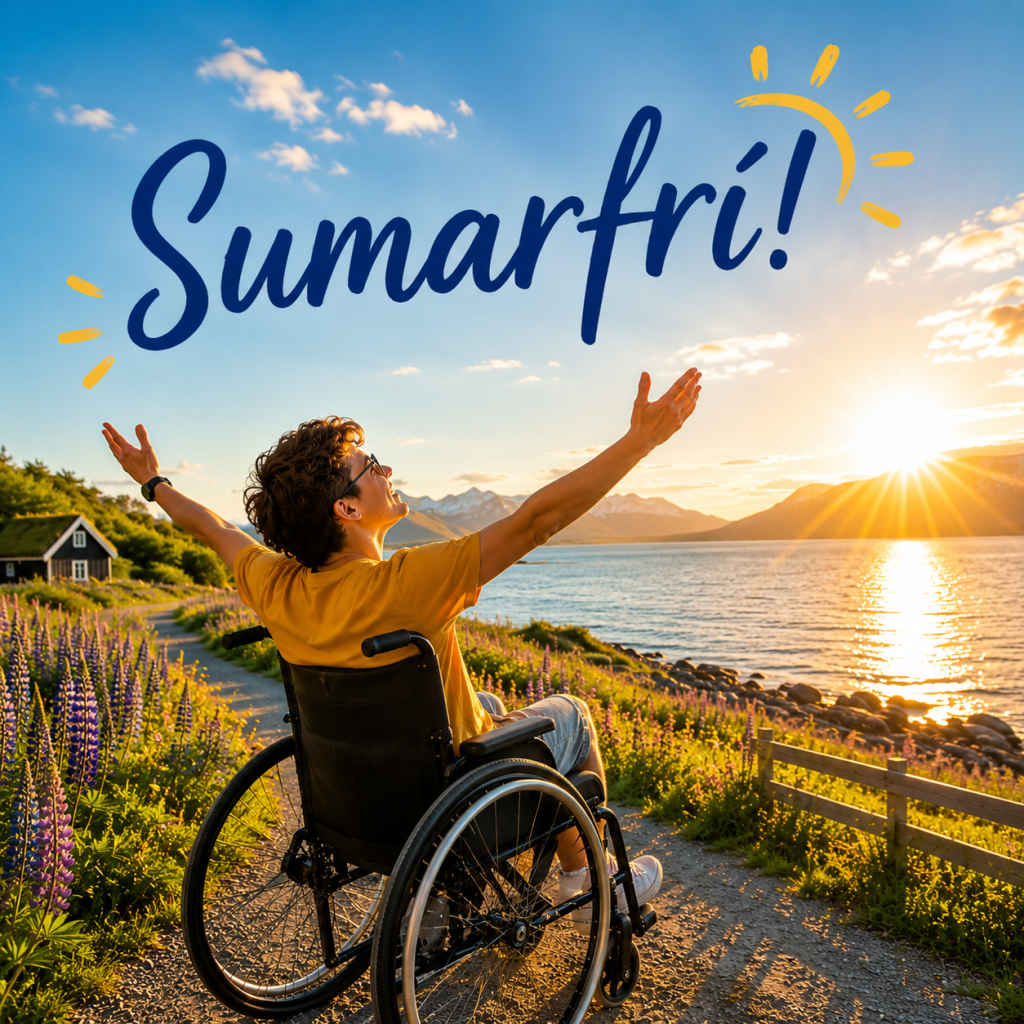
Accessibility and assistive devices are equalizing tools, which contribute to the fact that people with disabilities have the same opportunities as others to participate in outdoor activities and sports, school, work, or simply take care of themselves.d. that people with disabilities have the opportunity, on an equal basis with others, to engage in outdoor activities and sports, attend school, work, or simply care for their child and participate in their life on the same terms as parents without disabilities.
I have met people who are concerned about good accessibility; these people have realized that anyone can become mobility-impaired during their lifetime, for a short time or permanently, and then accessibility is everything. I have also encountered people who feel that the demand for accessibility is not justified, saying "it's never possible to make all places accessible." Such thinking is narrow-minded, and changing it requires a shift in attitude.
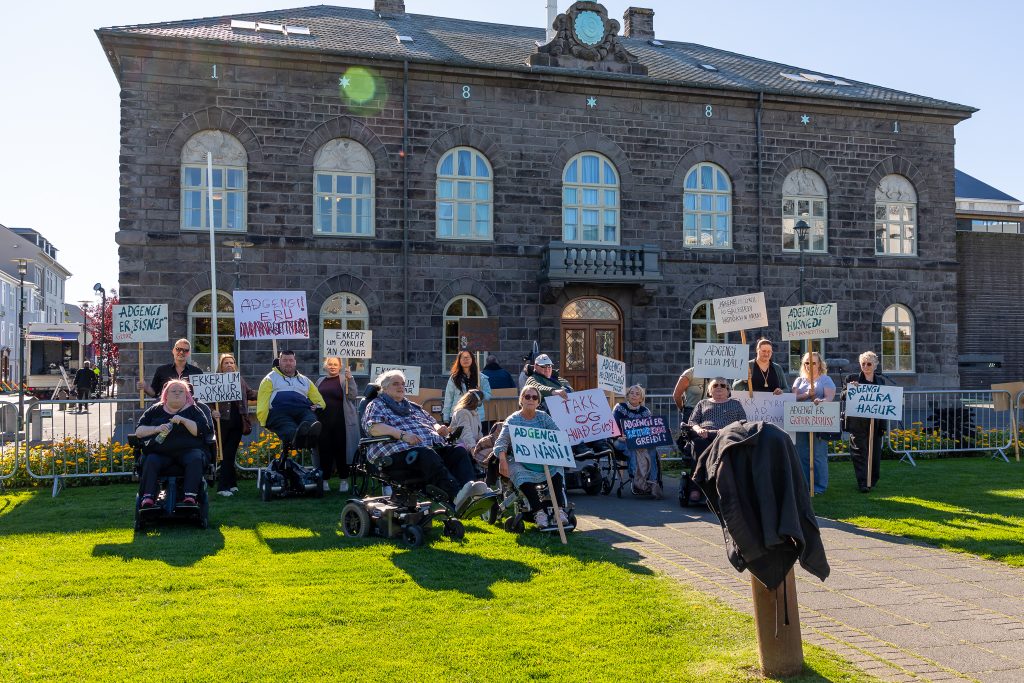
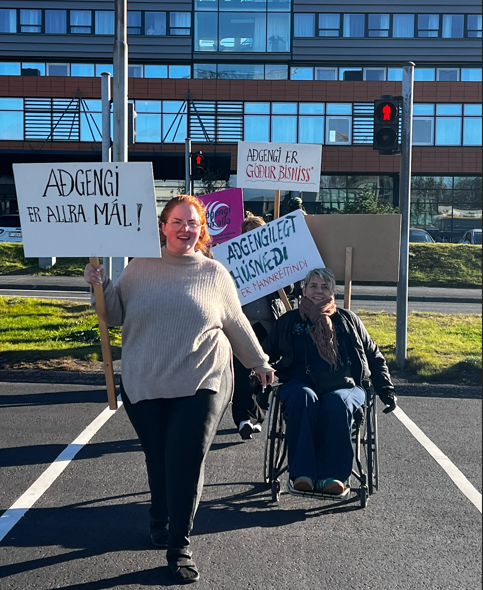
We are six organizations that are behind the Access Troll, a accessibility awareness campaign taking place today. We have in common that our members are, or will become, mobility-impaired. The organizations are MS, MND, CP, SEM, GIGT, and SJÁLFSBJÖRG, which are organizing a awareness campaign about the importance of accessibility to all areas of society.
Accessibility is such a small word for such a large and important part of everyone's life. Most of us are born with the inherent right to have our feet carry us over nearly any obstacle that comes our way, and we don't have to worry about whether we can get up onto the next sidewalk, whether we can visit grandma and grandpa, our friends, parents, children, or siblings, go to the movies, the bakery, or the nearest playground, or use a restroom. We, in fact, have this built-in and inherent right of access that society has provided for us.
"Most," I said, "because then there are those of us who get injured or fall ill, or have a congenital mobility impairment, and we are not a small group." Therefore, rights that are taken for granted are not so self-evident. It's painful to lack access, to be unable to participate in all kinds of activities, trips, and social gatherings, in professional life or education, because of inaccessibility. A feeling of rejection is a constant companion for many who use a wheelchair in their daily lives, and frustration over not having access also becomes a part of life. It's painful to experience being poorly received and to face indifference when accessibility needs are explained, and it's difficult to experience others believing I don't need access to their store, their restaurant, or other places enjoyed by the public. Assistive devices are our liberation and our access, our path to independence. The importance of accessibility is immense.
Access to the community as a whole is something everyone benefits from; in fact, it's good business for services to be accessible and barrier-free. It doesn't cost more to make the built environment accessible, but it requires a change in mindset and a different approach. It requires a change in attitude. Accessibility is the key to independence, participation, and active participation, it's that simple.
Today, an individual has made it possible to ramp up Iceland, and now we who are mobility-impaired have access to nearly 2,000 more places than in 2021. However, there is still a need for awareness about accessibility, as swimming pools, stores, and tourist attractions remain inaccessible, and workplaces and school buildings are still inaccessible, and there is still no access to sports stadiums, concert halls, and residential housing, and public transportation is still inaccessible. So, awareness still needs to be raised that accessibility must be for everyone, because it benefits everyone.
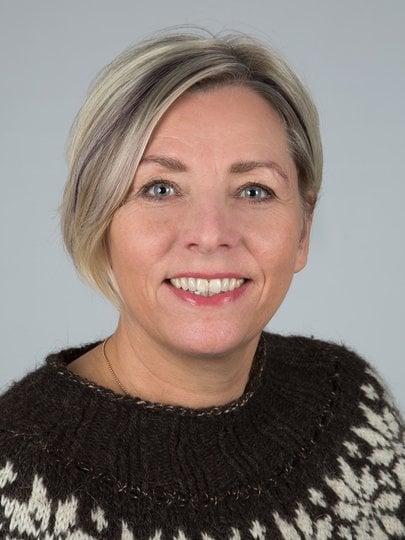
Þuríður Harpa Sigurðardóttir, chairperson of Sjálfsbjörg, the National Federation of the Disabled.